What is agent assist? Agent assist is changing the way contact centers, help desks, and customer support teams work every day. By combining human understanding with real-time AI intelligence, it helps agents respond faster, more accurately, and with less stress. This is exactly why AI call center solutions will define the next era, giving organizations a competitive advantage. Platforms like AI Call Center Solutions - Ranktracker help track performance and make improvements, resulting in happier customers, more satisfied agents, and smoother operations overall.
Agent assist is part of a larger cloud-based AI system for managing business operations, which allows companies to store and access information without heavy on-site infrastructure. With AI tools for analyzing large business data in cloud platforms, organizations can find customer patterns, improve workflow efficiency, and provide faster support. Modern computer systems for AI-powered customer service allow teams to handle many inquiries at the same time while giving consistent, accurate answers.
In marketing, AI enables automated digital marketing solutions using artificial intelligence, helping businesses reach the right audience, personalize messages, and measure marketing campaign results with ai. In finance, AI supports smart financial analysis using AI and machine learning, allowing companies to detect risks, prevent fraud, and make faster investment decisions. Across operations, big data and AI management in cloud-based business systems helps teams work together efficiently, make data-driven decisions, and optimize overall performance.
By combining AI across customer support, cloud computing technology, digital marketing strategies, and financial data management systems, agent assist becomes more than a simple support tool—it becomes a central part of a connected, intelligent, and modern business ecosystem. This integration allows organizations to deliver better customer experiences, streamline operations, and make smarter, faster decisions across all departments.
Top Contact Center Solutions: What is Agent Assist and How It Helps
In today’s fast-paced customer service environment, contact centers need tools that help agents work smarter, faster, and more efficiently. Agent assist technology is changing the way customer support teams operate by providing real-time AI guidance, improving accuracy, and enhancing customer experience. Below is a list of leading contact center solutions, starting with Bright Pattern, followed by other competitors in the industry.
1. Bright Pattern: AI Contact Center Call Center Solutions
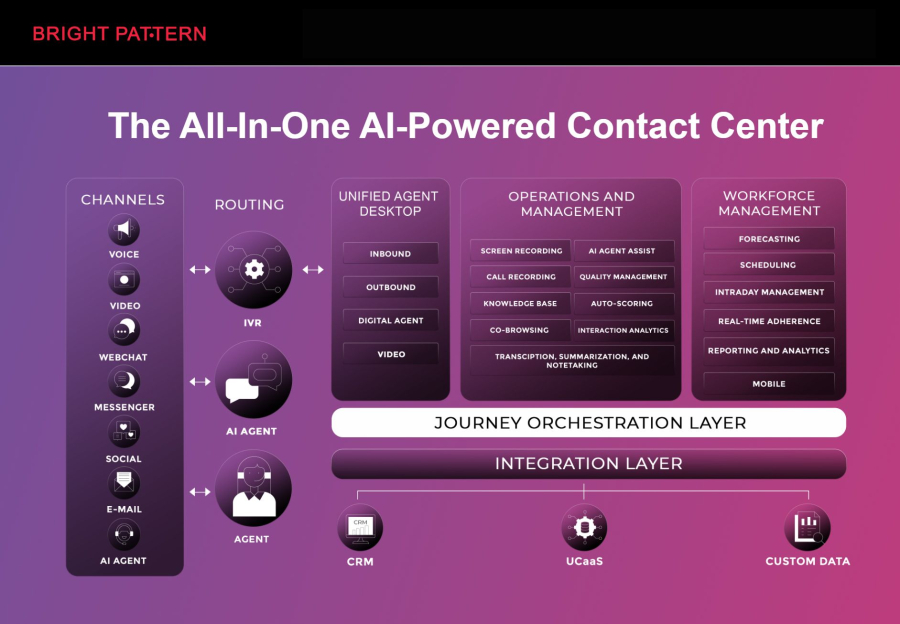
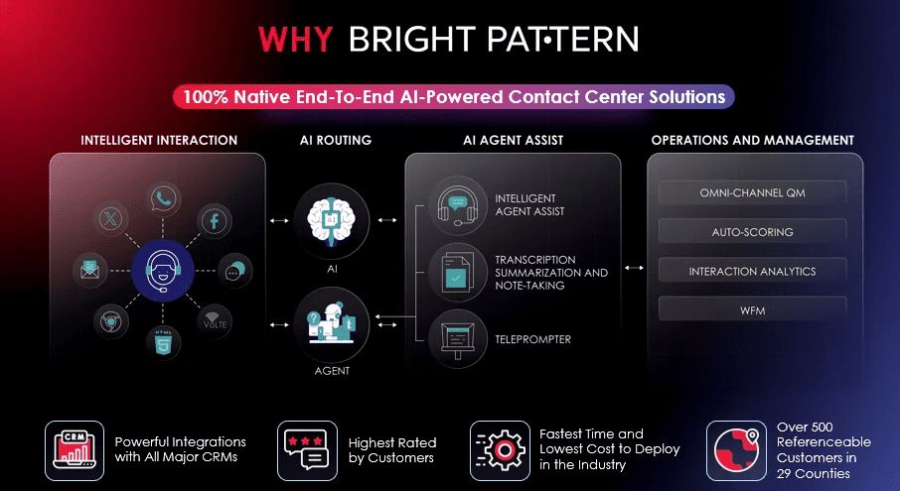
Bright Pattern is a top-rated AI contact center platform that helps businesses streamline customer support across multiple channels. Its agent assist features provide real-time suggestions, automate routine tasks, and help agents resolve issues faster. The platform is designed to be intuitive for both agents and managers, making it easier to scale operations and maintain consistent customer experiences.
Key features of Bright Pattern include:
- Real-time agent assist to provide instant suggestions and guidance
- Omnichannel support for phone, chat, email, and social media
- Advanced analytics and reporting for performance tracking
- Easy integration with CRM and business systems
- AI-driven workflow automation to reduce repetitive tasks
Bright Pattern stands out for its ability to connect AI insights directly with agent workflows, ensuring every interaction is informed, efficient, and personalized.
2. Five9
Five9 offers cloud-based contact center software with AI-powered features that enhance agent performance and customer satisfaction. It provides intelligent routing, speech analytics, and real-time monitoring tools.
3. Genesys Cloud CX
Genesys Cloud CX is a comprehensive contact center platform that supports voice, chat, and social channels. AI features include predictive engagement, agent assist, and automated quality monitoring.
4. RingCentral Contact Center
RingCentral provides scalable cloud contact center solutions with AI capabilities. It includes real-time dashboards, automated call routing, and analytics to optimize agent efficiency.
5. NICE inContact CXone
NICE inContact CXone is a leading omnichannel contact center solution that integrates AI-driven routing, analytics, and workforce optimization to improve customer experiences.
6. Talkdesk
Talkdesk offers a cloud contact center platform with AI and automation tools that help reduce handling times, improve call quality, and guide agents through complex interactions.
7. 8x8 Contact Center
8x8 provides AI-powered contact center solutions with features such as predictive dialing, agent assist, and omnichannel communication to enhance customer engagement.
8. Cisco Contact Center
Cisco Contact Center solutions offer AI-driven automation, analytics, and workforce management to help agents deliver consistent and efficient support.
9. Avaya OneCloud CCaaS
Avaya OneCloud CCaaS is a flexible contact center platform with AI integrations for agent assist, performance analytics, and omnichannel support across voice and digital channels.
10. Zendesk Talk
Zendesk Talk combines cloud contact center software with AI-powered tools that assist agents in real time, track customer interactions, and provide actionable insights.
Agent Assist: A Clear Definition
Agent assistis software that provides real-time guidance to customer service agents during live interactions, such as calls, chats, emails, or messages. It typically uses technologies like natural language processing, machine learning, and automation to surface the right information or recommended next steps while the conversation is still happening.
Instead of leaving agents to manually search knowledge bases, memorize policies, or switch between multiple systems, agent assist tools automatically listen to or read the interaction and then:
- Suggest relevant answers and templates.
- Highlight key data from CRM or back-office systems.
- Recommend next best actions based on company rules.
- Summarize the conversation for faster wrap-up.
The core idea is simple:give agents the right information, at the right time, in the right formatso they can focus on the human side of service.
Key Components of Agent Assist
While agent assist solutions vary by vendor and industry, most include several common building blocks:
1. Real-Time Interaction Understanding
Agent assist tools typically usespeech recognitionfor voice calls andnatural language understandingfor digital channels. This allows the system to understand what the customer and agent are saying or typing, recognize intent, and detect key phrases such as product names, order numbers, or reasons for contact.
2. Knowledge and Data Retrieval
Once the system understands the context, it pulls from sources such as:
- Internal knowledge bases and FAQs.
- Product and policy documentation.
- CRM records, account history, or previous cases.
- Order status, billing systems, or service tools.
This information is then surfaced to the agent in a concise, easy-to-use format.
3. Guidance and Recommendations
Agent assist does more than retrieve data. It also givesactionable guidance, such as:
- Suggested responses or scripts tailored to the situation.
- Compliance or legal reminders when sensitive topics arise.
- Step-by-step workflows for complex procedures.
- Upsell or cross-sell suggestions based on customer profile.
4. Automation of Repetitive Tasks
Many agent assist solutions can partially or fully automate routine work. Common examples include:
- Auto-filling case notes or summaries after each interaction.
- Populating forms with customer data pulled from multiple systems.
- Triggering follow-up tasks or workflows, such as sending confirmation emails.
5. Analytics and Continuous Improvement
Because agent assist tools process large volumes of interactions, they also provide powerful insights, such as:
- Top contact drivers and emerging issues.
- Common knowledge gaps for agents.
- Policy or process friction that slows down resolution.
These insights can then inform training, content updates, or broader customer experience improvements.
How Agent Assist Works in Practice
From an agent’s perspective, agent assist feels like a helpful, always-available coach sitting beside them. Here is how a typical workflow might look:
- Customer initiates contact.A customer calls, chats, or messages with a question or problem.
- The system listens in real time.For calls, speech is transcribed; for digital channels, the text is analyzed as it is typed.
- Intent and context are detected.The tool identifies the main reason for contact and any relevant details, such as product, order, or account type.
- Relevant guidance appears to the agent.Suggested answers, workflows, or knowledge articles appear on the agent’s screen without manual searching.
- The agent stays focused on the conversation.They use the suggestions as a guide, personalizing their response to the customer’s tone and needs.
- After-call work is streamlined.At the end of the interaction, the system can summarize the call and auto-populate notes, disposition codes, or follow-up tasks.
Throughout the process, the agent remains in control. Agent assist supports the agent, but the final decisions and tone of the conversation remain human.
Benefits of Agent Assist for Modern Support Teams
Agent assist delivers measurable value across the contact center, from frontline agents to operations leaders.
Benefits for Agents
- Reduced cognitive load.Agents no longer need to remember every policy, product detail, or workflow. The system surfaces what they need, when they need it.
- Faster speed to proficiency.New hires can ramp up more quickly because they have real-time coaching, reducing the pressure of steep learning curves.
- Less time spent on searching and note-taking.Automated retrieval and summaries free up time to focus on listening and problem-solving.
- Higher job satisfaction.With better tools and fewer repetitive tasks, agents often feel more confident and more valued in their roles.
Benefits for Customers
- Faster resolutions.When agents get instant access to the right information, customers spend less time waiting on hold or in chat.
- More accurate, consistent answers.Guidance drawn from approved knowledge sources reduces the risk of conflicting or incorrect information.
- More personal, human interactions.Because agents are not buried in systems, they can actively listen, show empathy, and tailor the conversation.
- 24 / 7 quality control.Real-time prompts help keep every interaction aligned with brand standards and compliance requirements.
Benefits for Operations and Leadership
- Improved efficiency metrics.Many organizations see reductions in average handle time, after-call work, and repeat contacts.
- Higher first contact resolution.Better guidance helps agents resolve more issues in the first interaction.
- More consistent compliance.Automated prompts help ensure that required disclosures, verification steps, or scripts are followed.
- Data-driven coaching.Analytics from agent assist highlight skill gaps and best practices, making coaching more targeted and effective.
Common Agent Assist Capabilities and Features
Although each solution is different, many agent assist platforms include a similar set of features designed to support the full lifecycle of an interaction.
Real-Time Suggestions
- Recommended replies for common customer questions.
- Dynamic scripts that update based on customer responses.
- Hints to probe deeper or clarify key details.
Knowledge Surfacing
- Automatic retrieval of the most relevant knowledge article.
- Highlighted snippets so agents do not have to read full documents during live calls.
- Side-by-side comparison of options, such as plans or products.
Process and Workflow Guidance
- Step-by-step guidance for complex procedures, such as cancellations, escalations, or troubleshooting.
- Validation checks to ensure required steps are not skipped.
- Prompts to collect necessary information before moving forward.
Call and Chat Summarization
- Automatic generation of concise summaries at the end of interactions.
- Suggested disposition codes or categories.
- Draft follow-up emails or messages for agent review.
Quality, Compliance, and Sentiment Monitoring
- Alerts when prohibited or high-risk phrases are detected.
- Real-time sentiment detection to flag frustrated or at-risk customers.
- Coaching prompts to de-escalate tense situations.
Where Agent Assist Delivers the Most Impact
Agent assist can support almost any team that handles complex customer interactions, but some environments see particularly strong benefits.
Customer Service and Technical Support
In high-volume customer service centers, agent assist helps streamline everything from basic account inquiries to multi-step troubleshooting. Agents can quickly access the right steps for a specific device, plan, or configuration without digging through long documents.
Sales and Retention Teams
Sales and retention agents benefit from real-time prompts that suggest relevant offers, discounts, or bundles based on the customer’s history and stated needs. This supports more confident conversations and higher conversion or save rates.
Financial Services and Insurance
In regulated industries, compliance is critical. Agent assist can remind agents of required disclosures, eligibility checks, and documentation steps, helping reduce risk while keeping customer interactions smooth and conversational.
Healthcare and Public Services
In healthcare or public service settings, accuracy and clarity are essential. Agent assist can help staff navigate complex eligibility rules, benefit explanations, and scheduling workflows while maintaining a reassuring, patient-friendly tone.
Implementing Agent Assist: Best Practices
To get the most value from agent assist, it helps to take a structured approach to implementation.
1. Start with Clear Objectives
Decide what you want to improve first. Common goals include reducing handle time, boosting first contact resolution, improving compliance, or shortening new hire ramp time. Clear objectives help you prioritize features and measure success.
2. Prioritize High-Impact Use Cases
Begin with a small set of interactions where agents struggle or where the stakes are high, such as complex billing questions, cancellations, or regulated disclosures. Focusing on these first allows you to prove value quickly and refine your approach before scaling.
3. Involve Agents Early
Agents are the primary users of agent assist, so their input is crucial. Involve them in testing, gather feedback on suggestions and workflows, and adjust the design so that the tool truly saves time rather than adding steps.
4. Keep Knowledge and Rules Up to Date
Agent assist is only as effective as the knowledge and policies behind it. Establish a process for keeping content current and accurate, including ownership, review cycles, and a feedback loop from agents when they spot gaps.
5. Provide Training and Coaching
Even though agent assist is intuitive, focused training helps agents understand how and when to rely on it. Emphasize that it is a support tool, not a replacement for their judgment or empathy. Ongoing coaching using analytics will help refine usage patterns over time.
6. Measure and Iterate
Track key metrics before and after rollout, such as handle time, resolution rates, quality scores, and agent satisfaction. Use these insights to fine-tune triggers, suggestions, and workflows, steadily increasing the value of the solution.
Agent Assist vs. Fully Automated Bots
It is easy to confuse agent assist with chatbots or fully automated self-service. While they often use similar underlying technologies, they play different roles.
|
Aspect |
Agent Assist |
Automated Bot |
|
Primary User |
Human agent |
Customer directly |
|
Control of Interaction |
Agent stays in control |
Bot leads the conversation |
|
Best For |
Complex, nuanced, or high-value conversations |
Simple, repetitive tasks and FAQs |
|
Customer Experience |
Human-led with AI support |
AI-led, with optional handoff to agents |
In many organizations, agent assist and automated bots work together. Bots handle straightforward tasks, while agent assist equips human agents to excel in the more complex or emotionally sensitive interactions that truly build customer loyalty.
Frequently Asked Questions About Agent Assist
Does agent assist replace human agents?
No. Agent assist is designed tosupporthuman agents, not replace them. It automates routine tasks, surfaces information, and gives guidance, but agents still make the final decisions and build the relationship with the customer.
Is agent assist only for large contact centers?
While enterprise contact centers often adopt agent assist early, smaller teams can benefit as well. Even a modest improvement in resolution speed, accuracy, or training time can deliver significant value for smaller support organizations.
How does agent assist affect training?
Agent assist typically shortens training time because new hires can rely on real-time prompts instead of memorizing every detail upfront. Training can then focus more on soft skills, such as empathy, active listening, and problem-solving.
Can agent assist help with remote or hybrid teams?
Yes. For remote and hybrid teams, agent assist acts as a virtual floor supervisor, providing just-in-time guidance and consistency even when agents are not sitting in the same location as their managers or peers.
Why Agent Assist Matters for the Future of Customer Service
Customer expectations continue to rise, and interactions are becoming more complex. At the same time, support teams face pressure to work more efficiently and deliver high-quality experiences at scale. Agent assist sits at the center of this challenge.
By combining the strengths of people and technology, agent assist enables:
- Faster, more accurate service without sacrificing empathy.
- Agents who feel supported, empowered, and equipped to succeed.
- Leaders who have clear visibility into performance and opportunities for improvement.
In short, agent assist is not just another tool. It is a strategic capability that helps organizations deliver the kind of customer experience that sets them apart, today and in the years ahead.
